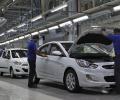
Rising automobile exports are reflective of the increasing acceptance of India-manufactured vehicles across global markets, according to Economic Survey 2025-26.
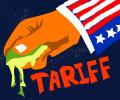
India must focus on building enduring national capabilities and economic sovereignty in the face of shrinking space for rules-based trading, anti-immigrant stance, weaponization of energy sources and growing use of export controls in critical sectors, the Economic Survey said on Thursday.

Highlights of the Economic Survey 2025-26

According to the Economic Survey 2026, the appropriate stance for 2026 is therefore one of strategic sobriety rather than defensive pessimism.

The value of the rupee, which has slipped to the 92 per dollar mark, does not accurately reflect India's stellar economic fundamentals, the Economic Survey said on Thursday.

The country's primary capital markets delivered a robust performance in FY26, emerging as a global leader in initial public offerings (IPOs) despite an uncertain environment, the Economic Survey said on Thursday.

The Survey is authored by Chief Economic Advisor V Anantha Nageswaran and his team.

The Economic Survey on Thursday projected the GDP growth in the range of 6.8 to 7.2 per cent in 2026-27, a tad lower than 7.4 per cent estimated in the current fiscal.
Indian economy to grow at 6.3-6.8 pc in FY26, against 6.4 pc in FY25

Finance Minister Nirmala Sitharaman on Monday tabled the Economic Survey 2021-22 along with Statistical Appendix in the Lok Sabha on the first day of the Budget session of Parliament. Later, the Lok Sabha was adjourned till tomorrow. The Economic Survey will now be tabled in the Upper House. The Budget Session of the parliament commenced on January 31 with President Ram Nath Kovind's address. The first part of the Budget session of Parliament will be held from January 31 to February 11 and the second part of the Budget session will take place from March 14 to April 8.

Industry leaders at MRAM Expo 2026 highlighted that India's maintenance economy has the potential to unlock a 1 per cent GDP opportunity. This growth can be achieved by addressing productivity losses from equipment breakdowns, unplanned downtime, and inefficient assets through smarter asset management practices. The NITI Aayog also supports AI-based predictive maintenance for resilient infrastructure, while the Indian Asset Performance Management market is projected for substantial growth by 2033.

The Indian economy can contract by 7.7 per cent in current financial year ending on March 31 and the growth could be 11 per cent in the next financial year, according to the Economic Survey tabled in Parliament by Finance Minister Nirmala Sitharaman. The contraction in FY21 is mainly due to coronavirus (Covid-19) pandemic and the visible damage caused by the subsequent countrywide lockdown to contain it. The survey unveiled two days before the Union Budget is broadly in line with forecasts by the Reserve Bank of India (RBI) which has said it expected the country's GDP to contract by 7.5 per cent in the year ending March 31.

India needs to sustain a GDP growth rate of 8 per cent to become a five trillion dollar economy by 2025, the Economic Survey has stated.
pbeat on the prospects of India's foreign trade contributing majorly to the economy, the Economic Survey on Wednesday cautioned against the negative impact of hardening of global oil prices and volatility among major currencies on country's exports.

Finance Minister Nirmala Sitharaman stated that India is likely to sustain economic growth of 7 per cent or more in 2026-27, continuing the pace recorded since the Covid-19 pandemic, despite geopolitical uncertainties and supply-chain disruptions.

The lack of faster growth in salaried jobs may well account for the degrowth in the unemployed educated population who are actively seeking jobs.
India has become the fourth largest economy in the world due to a strong economic growth but still has a low per capita income, the Economic Survey revealed.

The pre-budget Economic Survey, which is tabled in Parliament ahead of the Union Budget to present the state of the economy and suggest policy prescriptions, quite often misses on the GDP forecast, sometimes by a significant margin. This time, Finance Minister Nirmala Sitharaman will table the Economic Survey for 2021-22 in the Lok Sabha on Monday soon after the President's address to both Houses of Parliament. She will present the Union Budget for the next financial year beginning April 1, 2022, on Tuesday.

Amidst strained ties with China, the pre-budget Economic Survey on Monday made a strong case for seeking foreign direct investments (FDI) from Beijing to boost local manufacturing and tap the export market. As the US and Europe are shifting their immediate sourcing away from China, it is more effective to have Chinese companies invest in India and then export the products to these markets rather than importing from the neighbouring country, the Survey said.

S&P in November ruled out an upgrade in the country's rating for some considerable period, citing India's low per capita GDP and relatively high fiscal deficit.

The Karnataka Assembly has passed a resolution rejecting the K Kasturirangan report on Western Ghats conservation in its current form. The state government urged the Centre to address deficiencies, particularly concerning the inclusion of agricultural lands and human settlements in Environmentally Sensitive Areas (ESA) without proper physical surveys or livelihood support.

Making a case for an optimal fiscal stance, the Economic Survey on Friday said growth leads to debt sustainability and not necessarily vice-versa. "This is because debt sustainability depends on the 'Interest Rate Growth Rate Differential' (IRGD) i.e. the difference between the interest rate and the growth rate in an economy. "With the Indian context of potential high growth, the interest rate on debt paid by the Indian government has been less than India's growth rate by norm, not by exception," it said.

However, Icra Rating Principal Economist Aditi Nayar feels that the numbers are a bit too optimistic and need real heavy-lifting by the Centre and the states. "The survey forecasts on real and nominal GDP will require a substantial push from Central and state spending as private sector capacity expansion is anticipated to be intermittent, and sector-specific in the next couple of quarters," she said. Nayar added that private consumption is likely to chart a differentiated recovery across income and age groups. Based on the comments made in the Survey, she expects the Union Budget to incorporate a growth in gross tax revenue of 15-16 per cent.

Principal economic advisor, Ila Patnaik, is coordinating the work on Economic Survey 2013-14.

India needs to move beyond ease and cost of doing business and focus on the "speed of doing business" as the next leg of reforms to sustain economic growth and private investment, Confederation of Indian Industry (CII) President R Mukundan said.

Highlights of Economic Survey 2020-21, tabled in Parliament by Finance Minister Nirmala Sitharaman on Friday.


Fitch Ratings has affirmed India's sovereign credit rating at 'BBB-' with a stable outlook, acknowledging robust growth prospects and strong external finances. However, the agency highlighted concerns over elevated government debt, lagging structural metrics, and potential fiscal spending pressures due to rising youth unemployment.

Across 34 of 37 nations included in a Pew Research Center survey this year, the prevailing view is that artificial intelligence is more likely to displace workers than open up new employment opportunities.

The fiscal consolidation path and Rs 1 trillion stabilisation fund provide room to absorb mild shocks, but sustained oil-price increases pose risks.

Overall, the Survey warned that unless shifts in the vision of development were articulated and embraced, the Indian economy would lose the chance to move to a high-growth trajectory.

Uptick in growth projected in second half of current fiscal based on 10 factors including higher FDI flows, build up of demand pressure, positive GST revenue growth

India needs to create buffers for future economic downturns.

Through policy interventions, Indian cities need to be reimagined as a network of inter-connected assets and services which serve to strengthen the social contract between citizens and their cities by improving their quality of life, the Economic Survey has flagged.
Finance Minister Arun Jaitley on Friday tabled the pre-Budget Economic Survey in the Lok Sabha.

India's proposal to link BRICS payment systems, including central-bank digital currencies (CBDCs), was notably absent from the grouping's New Delhi Declaration, despite being a key agenda item for India's chairmanship. This omission leaves the 16-year effort for trade in local currencies without a settled payment architecture, with the declaration only 'acknowledging' the work of the BRICS Payment Task Force.
The Economic Survey was tabled in the Parliament on Friday.

The Survey adopts an unfettered approach in thinking about the appropriate economic model for India. This endeavour is reflected in the sky blue cover of the Survey, Chief Economic Adviser Krishnamurthy V Subramanian said.

Nagaland Governor Nand Kishore Yadav has advocated for increased use of technology, especially drones and geospatial systems, to enhance governance and create employment opportunities for the state's youth. During his visit to the Nagaland GIS and Remote Sensing Centre and Drone Centre of Excellence, he highlighted the broad applications of drone technology and the importance of skill development. The centre is actively training youth in various drone-related courses, aiming to meet the demand for drone pilots in the Northeast.

Of the 37,448 candidates registered for the Foreign Medical Graduate Examination (FMGE) in June, 36,288 appeared and 4,635 qualified.
